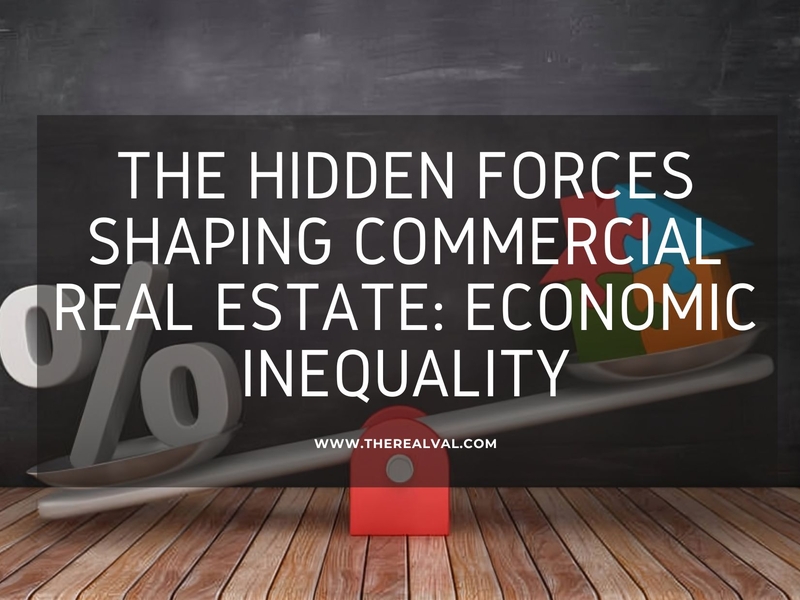
Have you ever wondered how the wealth gap impacts the places we work and shop? Economic inequality casts a long shadow over various sectors, including commercial real estate. This article delves into the intricate ways income and wealth disparities shape the CRE landscape, affecting everything from demand fluctuations to investment trends and the broader economic environment.
The health of the CRE sector is tightly linked to the overall economic climate. Economic downturns typically lead to job losses and reduced consumer spending, directly influencing the demand for commercial spaces.
The Link Between Economic Inequality and CRE Demand
- Income Disparities: The concentration of wealth among a small percentage of the population alters consumer spending patterns and business operations. High-income individuals may flock to luxury retail spaces or premium office buildings, while lower-income groups push demand for more affordable options. Consequently, the types of commercial properties that thrive can vary significantly based on the prevailing economic conditions.
- Vacancy Rates: Economic downturns or increasing inequality can result in business downsizing or closures, raising vacancy rates in commercial properties. The COVID-19 pandemic accelerated the shift toward remote work, causing office vacancy rates to soar, mirroring trends observed during previous financial crises. This phenomenon is particularly pronounced in regions grappling with high levels of economic inequality, where businesses find it challenging to remain profitable.
Investment Patterns in CRE
Economic inequality also shapes investment strategies within the CRE market. Investors tend to seek opportunities in areas promising higher returns. However, as wealth becomes more concentrated, investments may disproportionately target affluent neighborhoods or sectors, leaving economically disadvantaged areas overlooked. This results in:
- Underinvestment in Low-Income Areas: High poverty rates often deter investment in commercial properties, perpetuating cycles of decline and limiting economic opportunities for local residents.
- Gentrification: Rising interest in urban redevelopment can lead to gentrification, where wealthier individuals move into lower-income neighborhoods, displacing existing residents and transforming the local economic landscape.
Macro-Financial Factors
The link between macroeconomic conditions and CRE prices is significant. Research indicates that tightening financial conditions can lead to declines in CRE prices, roughly 2.5% to 3% for each standard deviation increase in financial constraints. Such macroeconomic pressures can disproportionately affect lower-income areas already struggling to thrive.
The Impact of Economic Inequality on Commercial Real Estate
- Diminished Consumer Spending Power: As the gap between the wealthy and lower-income groups widens, consumer spending power shrinks for a significant portion of the population. With declining disposable income, many individuals and families have less ability to purchase goods and services. This drop-in spending impacts businesses, making it harder for them to attract customers and generate revenue. As a result, demand for retail spaces decreases, and properties like shopping malls, strip centers, and storefronts may face higher vacancy rates and reduced rental income.
- Increased Demand for Affordable Housing: Economic inequality also drives a growing demand for affordable housing. As housing costs soar, many people struggle to find suitable living options within their budget. This creates a shift towards more affordable housing alternatives, such as multi-family units and rental properties. Consequently, the commercial real estate market may see heightened investment in these sectors, while demand for luxury housing and high-end retail spaces may dwindle.
- Polarization of Urban Centers: Rising inequality often results in the polarization of urban centers, where affluent areas coexist alongside neighborhoods facing poverty and economic challenges. This divide has significant implications for commercial real estate. Wealthier neighborhoods may see strong demand for upscale retail, fine dining, and entertainment, while lower-income areas may focus on essential services and affordable housing. This uneven development can concentrate commercial activity in affluent areas, further widening the gap between neighborhoods.
- Impact on Investment Decisions: Economic inequality influences investor behavior in the commercial real estate market. Investors might hesitate to put money into regions with high inequality, fearing risks like social unrest, crime, and unstable property values. This caution can lead to a concentration of investments in wealthier neighborhoods, reinforcing economic disparities and limiting growth in underserved areas.
- Policy Implications: Addressing the effects of economic inequality on commercial real estate requires both market-driven solutions and policy interventions. Policymakers have a key role in promoting more equitable development and increasing economic opportunities for all. Key strategies include:
- Affordable Housing Initiatives: Expanding affordable housing through subsidies, tax incentives, and inclusionary zoning policies.
- Economic Development Programs: Supporting job creation and income growth in disadvantaged areas through targeted initiatives.
- Urban Planning Strategies: Encouraging mixed-use and transit-oriented developments to foster more vibrant, equitable urban spaces.
- Tax Policies: Crafting tax measures that incentivize investment in underserved communities while discouraging wealth concentration.
Long-Term Implications of Economic Inequality on CRE
Sustainability of CRE Markets: The long-term sustainability of commercial real estate markets depends on addressing economic inequality. As disparities widen, market instability looms larger.
For example:
- Increased Defaults: Higher vacancy rates and reduced demand can lead to a surge in defaults on commercial real estate loans, impacting property owners and causing ripple effects throughout the financial system.
- Policy Responses: Policymakers may need to implement interventions aimed at reducing inequality to stabilize the CRE market. This could include incentives for businesses to invest in underserved areas or support for affordable housing initiatives that bolster local economies.
Conclusion
The interplay between economic inequality and commercial real estate is complex and multifaceted. As disparities continue to shape consumer behavior and investment strategies, understanding these dynamics becomes crucial for stakeholders across the sector. Tackling economic inequality not only fosters a more equitable society but also contributes to a more resilient and sustainable commercial real estate market.