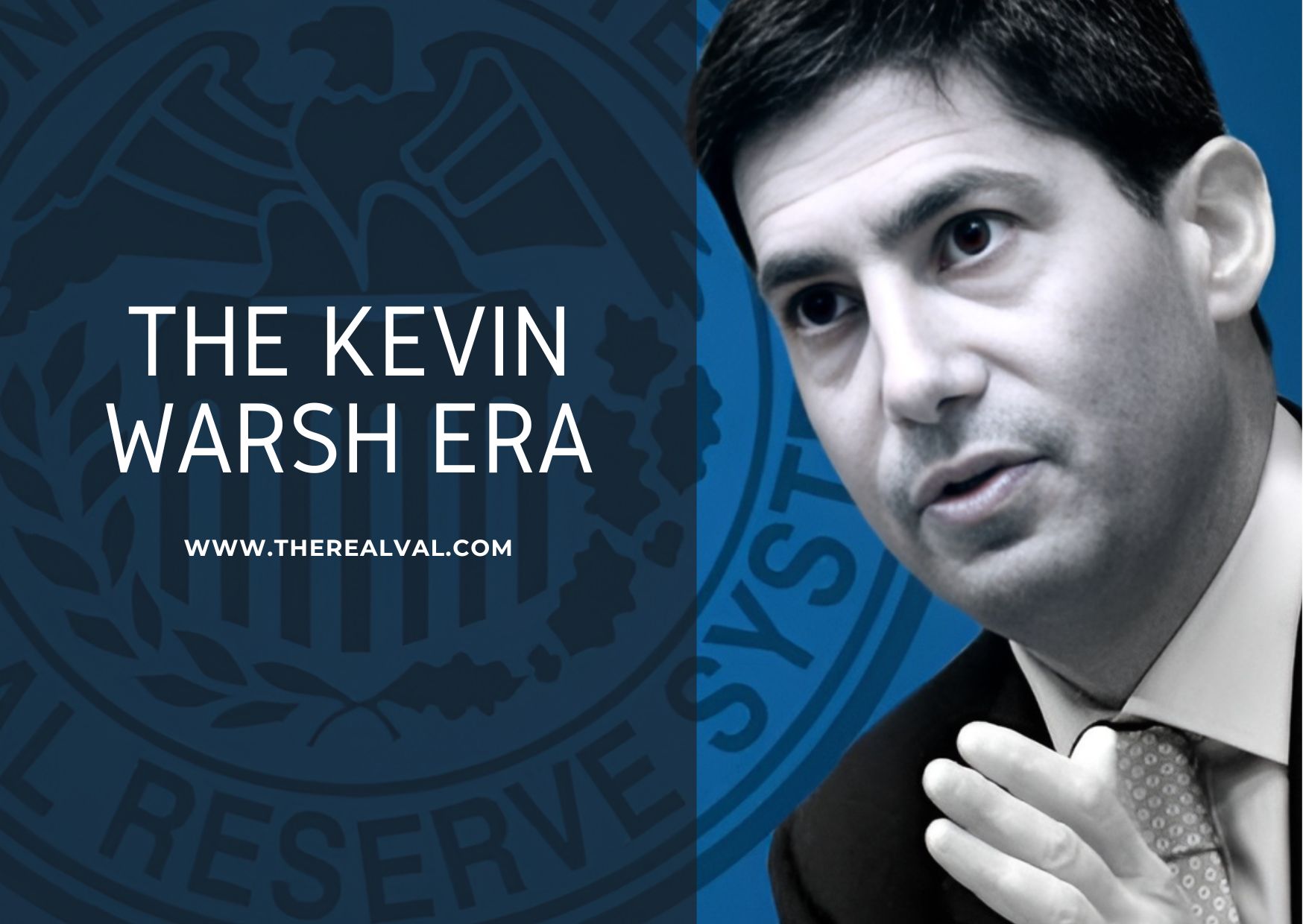
On May 13, 2026, the U.S. Senate confirmed Kevin Warsh as the 17th Chair of the Federal Reserve in a close 54-45 vote, making it one of the most contested confirmations in the central bank’s history. Warsh will lead his first FOMC meeting on June 16-17, 2026, an event that is being closely watched by investors, businesses, homeowners, and policymakers.
President Donald Trump spent much of his second term publicly attacking outgoing Chair Jerome Powell, accusing him of keeping borrowing costs unnecessarily high. Trump’s pressure campaign escalated to the point where the Justice Department launched a criminal investigation into alleged cost overruns at the Fed’s headquarters and that probe delayed Warsh’s own confirmation until the investigation was dropped. Now, with Warsh at the helm and an economy battling stubborn inflation, elevated energy costs, and a deeply divided FOMC, the stakes for monetary policy could hardly have been higher.
Who Is Kevin Warsh?
Let us understand who Kevin Warsh is to understand what his leadership could mean for the Federal Reserve. He is not new to economic policymaking. In 2006, at the age of 35, he became the youngest person ever appointed to the Federal Reserve Board of Governors. He served during the 2008 global financial crisis and worked closely with then-Fed Chair Ben Bernanke as the central bank took emergency steps to stabilize the U.S. financial system.
After leaving the Fed in 2011, Kevin Warsh joined Duquesne Family Office as a partner and later became a visiting fellow in economics at Stanford University’s Hoover Institution. He earned a public policy degree from Stanford University and a law degree from Harvard University. Earlier in his career, he worked in mergers and acquisitions at Morgan Stanley and later served as a special assistant for economic policy in the Bush administration.
His experience across law, finance, and central banking gives him a unique perspective and deep understanding of the financial system. However, it is not just his impressive resume that is drawing attention. Investors and policymakers are especially focused on his views on monetary policy and how he may shape the Federal Reserve’s decisions in the years ahead.
Kevin Warsh’s Vision for the Federal Reserve
Warsh’s vision for the Federal Reserve can be put in a simple way: he wants a Fed that does less, says less, and is more flexible in its decision-making. His approach is built around four major changes:
- Reducing the Fed’s Role in Financial Markets: Since the 2008 financial crisis, the Fed has become a major participant in financial markets through large-scale purchases of Treasury bonds and mortgage-backed securities. Warsh believes these emergency measures have been used inappropriately- distorting asset prices, benefiting wealthier investors, and blurring the line between monetary policy and government financing. He wants the Fed to gradually step back and rely mainly on interest rate changes to guide the economy.
- Communicating Less with Markets: Modern central banking places a strong emphasis on transparency through press conferences, economic projections, and forward guidance. Warsh argues that this has made investors overly dependent on Fed signals and has limited the central bank’s flexibility. He believes the Fed should communicate less about its future plans and retain the ability to adjust policy as conditions change.
- Encouraging More Open Debate: Warsh has suggested that FOMC meetings have become too predictable, with decisions largely settled before officials even meet. He prefers a process where policymakers debate current economic conditions in real time and make decisions based on the latest available information. In his view, a more dynamic discussion can lead to better policy outcomes.
- Looking Beyond Traditional Inflation Data: Warsh is skeptical that commonly used inflation measures, such as the Consumer Price Index and Personal Consumption Expenditures index, always provide the clearest picture of underlying inflation trends. He supports using alternative measures, such as trimmed-mean inflation indicators, and exploring new ways to track prices in real time. Basically, he wants policymakers to focus more on future economic trends, including the potential impact of AI on productivity, rather than relying too heavily on data that reflects past conditions.
Kevin Warsh’s Economic Inheritance
Kevin Warsh couldn’t have taken over the Federal Reserve at a more critical time. Currently, inflation remains well above the Fed’s 2% target, with consumer prices rising 3.8% year-over-year in April 2026 and the Fed’s preferred inflation measure, the PCE index, showing 3.5% inflation in March. Rising oil prices, which have climbed above $100 per barrel, are increasing energy and transportation costs, while tariffs introduced by the Trump administration are adding further inflationary pressure.
At the same time, policymakers within the Federal Reserve are deeply divided. At the Fed’s April 2026 meeting, four of the twelve voting members dissented from the committee’s decision (this was the highest level of disagreement in more than three decades). Some officials favored cutting interest rates, while others opposed even hinting at future rate reductions. For now, the Fed has kept its benchmark interest rate unchanged at 3.50%-3.75% throughout 2026.
Financial markets largely expect Warsh to leave rates unchanged at his first meeting as Fed Chair. Major banks and investors believe the Fed is likely to keep rates steady for the rest of the year unless economic conditions change significantly.
A Historic Parallel
The Volcker Parallel: Many observers have compared Kevin Warsh’s arrival at the Federal Reserve to Paul Volcker’s appointment in 1979. Volcker took charge when inflation was running at nearly 12% and responded with aggressive interest-rate hikes that ultimately brought inflation under control, though at the cost of a severe recession. Like Volcker, Warsh is being asked to address what many see as a major structural challenge. However, instead of fighting runaway inflation, Warsh’s focus is on reducing the Federal Reserve’s outsized role in financial markets and unwinding years of balance-sheet expansion.
The comparison, however, has clear limits. Today’s inflation rate is far lower than the levels Volcker faced, but the challenges confronting Warsh are arguably more complex. Rather than dealing with a single dominant problem, he must navigate multiple pressures at once, including persistent inflation, high energy prices, tariff-related costs, divisions within the Federal Open Market Committee, and the uncertain economic impact of artificial intelligence.
As a result, Warsh’s success is likely to depend less on dramatic policy moves and more on his ability to balance competing risks while building consensus within a divided Federal Reserve.
Will Warsh Cut Interest Rates, and What Happens If He Does?
Although Warsh has expressed support for lower interest rates in the past, he has made it clear that policy decisions will be driven by economic data, not political pressure. At present, inflation remains elevated and the labor market remains resilient, making a rate cut difficult to justify. In fact, many investors believe the Fed is more likely to raise rates than cut them before the end of 2026. Several Fed officials have also emphasized the need to keep all policy options open, including additional rate hikes if inflation remains stubbornly high.
Even if Warsh favors lower rates over the long run, pushing for an early rate cut would carry significant risks. Markets could view such a move as politically motivated rather than data-driven, potentially driving long-term Treasury yields and mortgage rates higher instead of lower. For the housing market, that would worsen affordability rather than improve it.
As a result, the most likely outcome is that the Fed keeps rates unchanged through most, if not all, of 2026. Any meaningful easing would probably require clearer signs that inflation is moving lower or that the labor market is weakening. Until then, a prolonged period of steady rates remains the base-case scenario.
Why the Fed’s Balance Sheet Matters More Than Interest Rates
While most attention is focused on whether the Fed will cut or raise interest rates, many analysts believe the bigger story under Warsh could be the Fed’s balance sheet, especially its roughly $2 trillion holdings of MBS.
Over the past two decades, the Fed purchased large amounts of mortgage-backed securities during periods of economic stress. These purchases helped lower mortgage rates by creating extra demand for mortgage bonds. Warsh has argued that the Fed should gradually exit this role and return to holding primarily U.S. Treasury securities, allowing market forces to determine mortgage rates more naturally.
This issue is particularly important for the housing market. When the Fed buys mortgage-backed securities, it helps keep the gap between Treasury yields and mortgage rates relatively small. If the Fed reduces or sells these holdings, that gap (known as the mortgage spread) can widen. As a result, mortgage rates could remain relatively high even if the Fed eventually lowers short-term interest rates. In other words, homebuyers may not see the same benefit from rate cuts that businesses and other borrowers experience.
Many analysts refer to this possibility as the Great Divergence. In this scenario, the Fed lowers short-term rates, but long-term mortgage rates stay elevated because private investors must absorb more mortgage-backed securities without the Fed acting as a major buyer. If that happens, the housing market could continue facing affordability challenges even during a period of monetary easing.
For real estate investors, homebuyers, and mortgage lenders, Warsh’s approach to shrinking the Fed’s balance sheet may ultimately have a greater impact than any decision he makes on short-term interest rates.
What Does This Mean for the Housing Market?
- Mortgage Rates Might Lower, But Not by Much: One of the biggest questions for homebuyers is whether Kevin Warsh’s leadership will bring down mortgage rates. The likely answer is yes, but only modestly. Analysts expect mortgage rates to gradually ease to 6.1% (MBA) at the end of 2026. While that would be an improvement, it is still far above the ultra-low rates seen in 2020 and 2021. This is because mortgage rates depend largely on long-term Treasury yields and mortgage spreads, not just the Fed’s benchmark rate. With inflation still above target, elevated energy prices, and the Fed reducing its mortgage-backed securities (MBS) holdings, a sharp decline in mortgage rates appears unlikely. Thus, homebuyers must not expect a dramatic drop in borrowing costs anytime soon.
- Housing Affordability Will Remain Challenging: The affordability crisis that has weighed on the housing market since 2022 is likely to continue. High home prices and mortgage rates in the 5-6% range continue to make homeownership difficult for many buyers. Meanwhile, the “lock-in effect” remains a major constraint on supply, as homeowners with 2-3% mortgages are reluctant to sell and take on much higher borrowing costs. Rather than a return to rapid price growth, the housing market is likely entering a period of slower, more sustainable appreciation. This environment tends to favor well-capitalized buyers and larger homebuilders.
- Commercial Real Estate Faces a Refinancing Challenge: Commercial real estate faces a significant refinancing hurdle as loans originated during the low-rate era come due. Property owners must now refinance at much higher interest rates, putting pressure on valuations and cash flows. Office properties remain the most vulnerable due to ongoing remote-work trends, while industrial and multifamily assets are better positioned but not immune. Warsh’s focus on shrinking the Fed’s balance sheet could keep long-term borrowing costs elevated, limiting relief for commercial property owners even if short-term rates eventually decline.
- Implications for REITs and Mortgage Companies: REITs, particularly those with office and retail exposure, continue to face pressure from higher financing costs and refinancing risks. Mortgage lenders and servicers are also operating in a difficult environment. Refinancing activity remains weak because most homeowners already have much lower mortgage rates than those available today. As a result, any benefits from future rate cuts are likely to come from new home purchases rather than a surge in refinancing demand. Overall, Warsh’s policies may support a more market-driven financial system, but they are unlikely to produce a rapid improvement in housing or commercial real estate conditions.
Possible Scenarios for Investors and Homeowners
- Base Case (Most Likely): Warsh keeps rates unchanged in June 2026 and maintains a cautious, data-driven approach. If inflation gradually eases, the Fed could deliver one or two small rate cuts in late 2026 or early 2027. Mortgage rates may move toward the 5.75-6.25% range by mid-2027, helping transaction activity recover slowly while home prices remain largely stable. Commercial real estate, however, continues to face refinancing pressures.
- Bull Case for Real Estate: Inflation falls faster than expected, helped by lower energy prices and easing geopolitical tensions. The Fed responds with multiple rate cuts, pushing mortgage rates closer to 5.5%. Housing activity picks up, particularly among first-time buyers, and improving productivity from AI begins to support economic growth.
- Bear Case: Inflation remains stuck above target, energy prices stay high, and Fed policymakers remain divided. Rate cuts are delayed, mortgage rates stay above 6.5%, and commercial real estate faces growing refinancing stress. Higher borrowing costs continue to weigh on economic growth and investment.
Kevin Warsh has taken charge of the Federal Reserve at a challenging moment. He has inherited persistent inflation, economic uncertainty, political scrutiny, and a housing market struggling with affordability. His vision of a smaller, less interventionist Fed is clear, but turning that vision into policy will require building consensus within a divided Federal Open Market Committee.
For real estate, the outlook is mixed. Interest rates are likely to move lower over the next 12-24 months, but any decline is expected to be gradual and limited. Structural factors, especially the Fed’s effort to reduce its balance sheet, could keep mortgage rates elevated even if short-term rates fall.
The decisions Warsh makes in his first months as Fed Chair, beginning with his June 16-17 FOMC meeting, will play a major role in shaping the future of inflation, interest rates, and the U.S. real estate market. In the current uncertain market, disciplined underwriting matters more than ever. Connect with us to gain the clarity and confidence needed to navigate your next investment opportunity. We can be reached at info@therealval.com.